2026 April Student Spotlight
Published on April 20, 2026
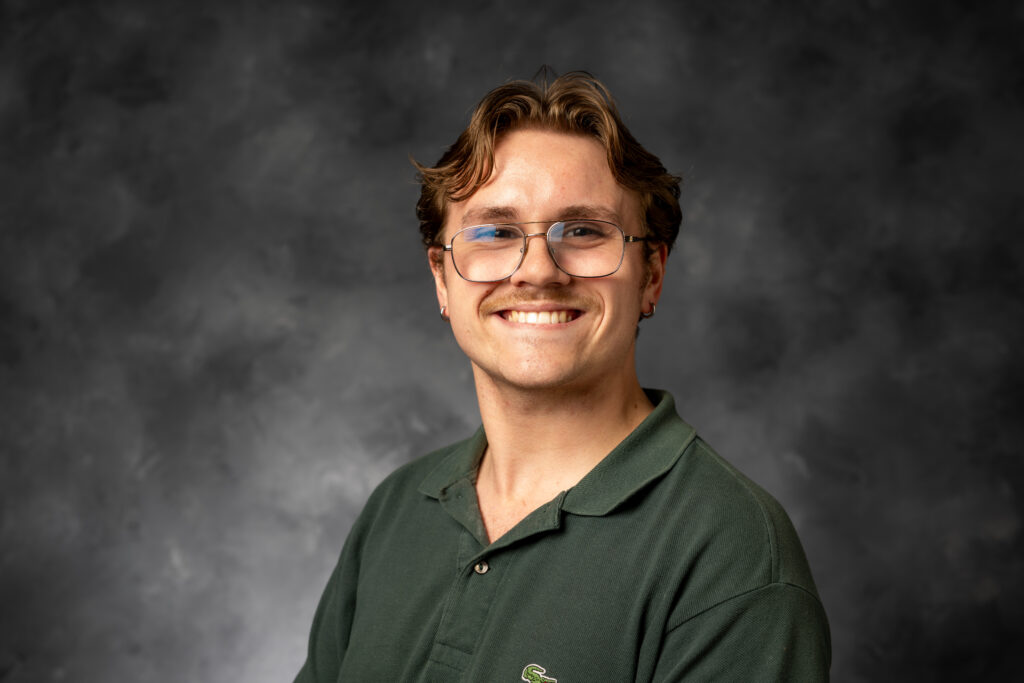
Max Hansen
pronouns: He/HIm/His
Program: 2nd year MS
Hometown: Sugar Grove, IL
Field(s) of interest: Chronic Disease Epidemiology, Dementia Risk Reduction
Topic of current project: Thesis: QUANTIFYING THE IMPACT OF LONGITUDINAL DIABETES FACTORS ON DEMENTIA PROGNOSIS: INSIGHTS FROM ACCELERATED FAILURE TIME MODELING IN THE HEALTH AND RETIREMENT STUDY
Quickfire Queries:
What is a piece of advice for MS – Epi students just starting out?
Above all, I strongly recommend that new MS Epi students recognize and understand the differences between their program and the MPH. While both are valuable in their own ways, the MS requires a genuine interest in a research topic, which is often difficult to carve out without experience. Despite this, there are plenty of avenues for MS students who have yet to be given the opportunity to work on a research project. Attending and engaging are two different things, and for MS students especially, I believe it’s vital to actively engage with the research discussed at Epi Seminar and Epi Journal Club, particularly with those who conducted work you find interesting. By communicating with these individuals, one can begin to see how course concepts are applied in a study’s design & rationale. It’s very helpful to identify which topics excite you during these sessions; once you find a broad area of interest, try to narrow it down. Then, aim to become even more specific! In my experience, there’s rarely a point where your focus becomes too niche.
What are your interests or hobbies outside of epidemiology?
I love music! Whether it is attending concerts, listening to it in my free time, or working on my own projects, I have always had a deep appreciation for music’s ability to resonate with individuals from all walks of life.
How do you maintain balance and well-being while managing research, coursework, and professional responsibilities?
If there are regular, weekly assignments, recognize how long those assignments often take you to complete, and block off dedicated times in your schedule to complete these as soon as possible. By doing so, you will free up massive amounts of downstream work time. Otherwise, take your time! Not in the sense of pushing the work off, but rather picking at it over a long period of time. The best work is done during the time you spend away from your desk. Let your brain rest and take a step back during moments of exhaustion in order to tackle bigger projects or tasks from a different perspective the next time you feel able.
Have you been part of any research showcases, presentations, or campaigns? What was that experience like?
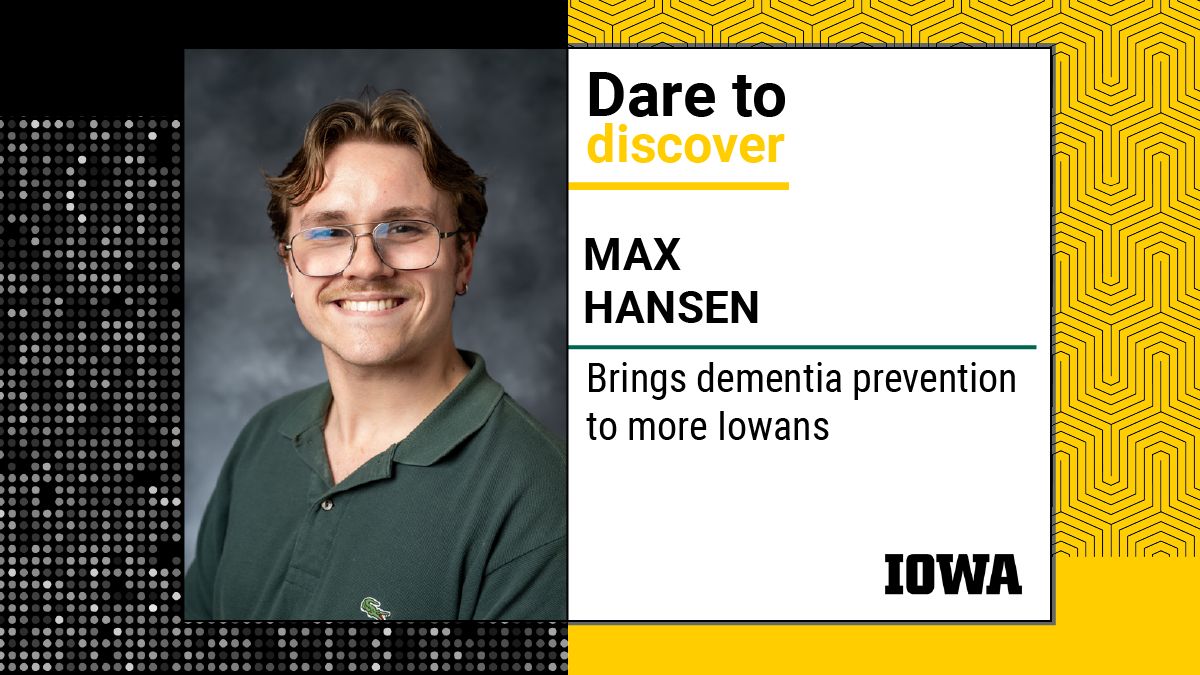
Last fall, I was selected to be apart of UI’s Dare to Discover campaign, which highlights student researchers across campus. Students are nominated by their supervisors, and the recognition made me even more thankful for mine, Dr. Juliana Souza-Talarico. Her support for me, not just as a researcher, but as a human being, is what pushed me toward refining my skills on her team. Overall, the campaign experience was extremely gratifying, and given that my work that was recognized for this campaign has been done on an entirely volunteer basis, it is recognition like this that really makes me feel appreciated at this institution where financial support is not always available.
Can you briefly describe your current research or what you’re working on?
At the moment, I am primarily focused on my thesis which aims to understand how different classes of HbA1c maintenance influence the timing of an individual’s potential dementia. By understanding this, diabetic individuals in clinical settings would be able to receive better insight into how their specific disease factors may influence the timing of their cognitive decline.
Is there a mentor, advisor, or researcher who has significantly influenced your work? What have you learned from them?
Dr. Shannon Lea Watkins, who supervised and mentored my undergraduate research, has profoundly shaped my perspective on research. She approaches research with the target population at the forefront, recognizing that data alone cannot capture the human experience. Just as you cannot understand the terrain until you have walked the path yourself, Shannon shows that a true understanding of a community requires walking alongside them through direct, empathetic engagement.
What is one self-care tip/trick that has helped you while in grad school?
Set a strict, no-exceptions cut-off time during the week to completely walk away from whatever you’re working on. I find that much of my late-night work gets done on weekends, but late weekday evenings are incredibly detrimental to the rest of the week and can easily make a Monday feel like a full week of work.
What’s a random fact about you that usually surprises people?
I used to perform in downtown Iowa City and Des Moines!
What is your favorite part of your week?
The start! I usually start my week off with the most energy and feel most productive on the first day after recharging over the weekend.
What is something you are thankful for right now?
My incredible family and my partner, Faith, continue to show endless support for my goals. I can’t truly find the words to express the extent of my gratitude.
If you didn’t have to worry about money and couldn’t pursue Epidemiology, what would your dream career be?
If i didn’t have to worry about money and couldn’t pursue Epidemiology, I would likely find myself in an artistic space either through music, graphic design, or drawing.
If you could have any superpower to help you succeed in grad school, what would it be and why?
Teleportation! No more long drives for conferences, or anxiety about making it to class with short gaps in my schedule.
Ranking must-haves for surviving grad school:
1.Health Work – Life Boundaries
2. An understanding advisor
3. Caffeine
4. Dual computer screens
5. A support officemate
Congratulations, on being selected for the University of Iowa Dare to Discover campaign for your work advancing dementia prevention and brain health across Iowa
Newsletter Submissions
Do you have an accomplishment, note of advice, or another piece of work that you would like to share in an upcoming newsletter?