Allison Bohall explores the connection between public health, genetics, and healthy populations
Published on February 11, 2026
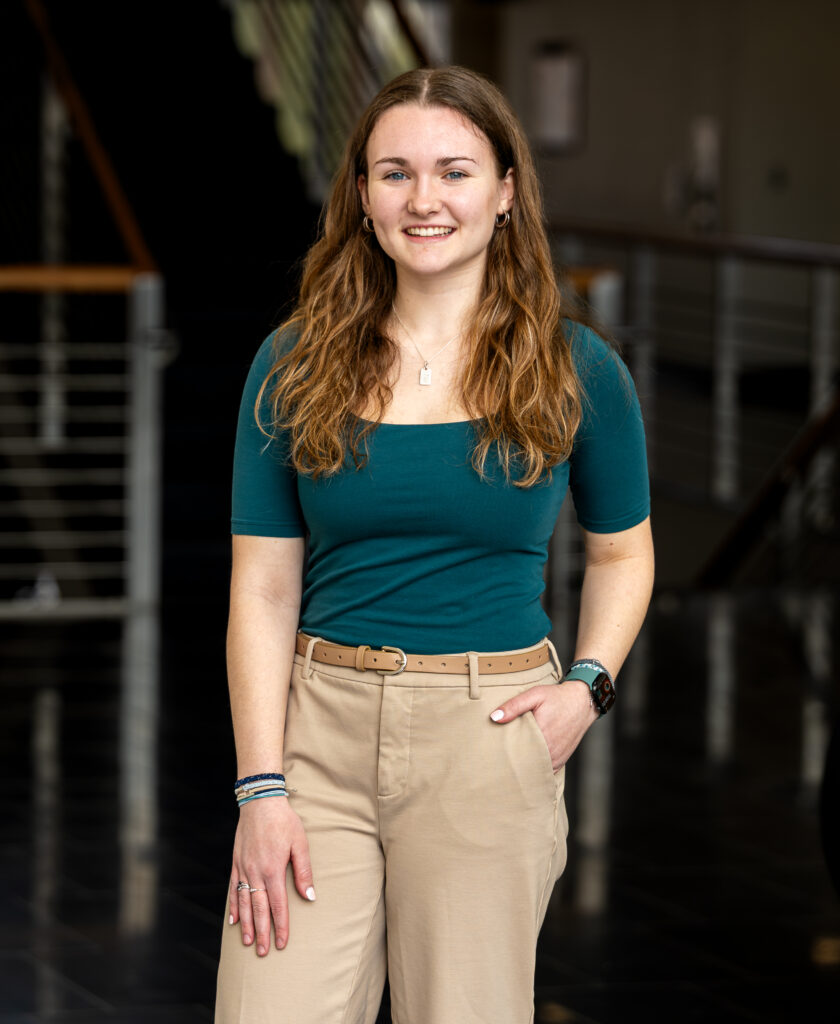
Allison Bohall is a 2nd-year undergraduate student exploring how public health and genetics are connected to the overall health of individuals and communities. She recently answered a few questions about her interests both inside and outside of the classroom and what her future plans are.
Where is your hometown?
Bemus Point, NY. It’s a small town about an hour south of Buffalo. Go Bills!
What is your degree/program of study?
I am currently working towards my BS in public health, as well as my BS in biology on the genetics and biotechnology track.
Why did you choose to study public health? What about it interests you?
I decided to study public health because it gives me the opportunity to explore the social side of science, while incorporating my passion for genetics. Public health has given me a unique perspective on science and health that most individuals may overlook, which feels like having a secret talent or having a hidden superpower. The perspective I continue to build helps to enhance my experiences and my understanding of the communities and environments around me.
What interests me most is how effective public health measures for a community can be, despite how unique each and every person is. I love the idea that there are similarities, which just goes to show how a person’s health can be impacted by the surrounding environment. I also find it interesting how genes, despite their small size, can play a role in public health. Epigenetics – a combination of epidemiology and genetics – looks at how genes are expressed differently depending on an individual’s environment and behaviors, as well as how these genetic expressions can be passed down through generations. I’m eager to learn more about this emerging field and the implications it can bring to genetics and population research.
What are your academic and research interests?
For academics, I am still in early biology classes, so I am really looking forward to learning the basic mechanisms of genetics and cell biology. I also really enjoy the hands-on aspect given to me for my public health classes. Being able to form ideas with others and see them in action is something I have always enjoyed doing, and I am so glad that I can do it in a public health setting now.
For research, I am interested in learning more about the connection between how genes are expressed in relation to the environment and individual lifestyles. This summer, I plan to work in an epigenetics lab that explores this idea with pre-term babies.
Tell us about some of the activities you are involved in.
On campus, I am the current Vice President for G.E.N.E Club which stands for Genetic Exploration and Engagement Club. We host weekly meetings to discuss current topics in genetics or hear from guest speakers. It’s a wonderful way to have fun, educational conversations and hear from professionals in a low stakes setting.
I am also a genetic counseling student clerk at Holden Comprehensive Cancer Center. Although my work is mostly clerical, I take the time to observe the patient data I work with and make connections to their diagnosis and the genes that may be involved with that.
Lastly, I volunteer as a crisis counselor through Crisis Text Line. It’s such a rewarding and unique experience to help those who need it most. My training has allowed me to help multiple individuals navigate a challenging time and de-escalate emotionally charged conversations.
Why do you think it is important for students to engage with on-campus and community organizations outside of the classroom?
I think it’s important for students to engage outside of the classroom because it allows you to escape your comfort zone. Going to classes becomes a regular part of your schedule and isn’t anything out of the ordinary. Having the opportunity to go out and do things that you are enthusiastic about can really set your experiences apart from others.
Because I stepped out of my comfort zone during my first year on campus, I now have a leadership position in G.E.N.E Club, and I have made so many friends and connections with professionals. I have also volunteered at local elementary schools through Healthy LifeStars and created a difference in the lives of so many kids. Both experiences have given me more confidence and unique experiences that will contribute to my academic and career success.
What are your career plans post-graduation?
I plan to earn my dual master’s degree in genetic counseling and public health genetics! I want to be a genetic counselor and help individuals but also use my MPH for education and advocacy to improve the lives of communities using genetics. I’m also willing to explore the idea of being an adjunct professor and bringing my expertise from my unique degrees!
What have you enjoyed most about your time at the College of Public Health?
The community! I have met so many of my closest friends here, and I love having them in my classes. Also, every professor I’ve had for class or have spoken to has been so supportive and willing to talk to you about anything that crosses your mind. The College of Public Health consists of some of the nicest and most intelligent people you will ever meet. I’m so grateful to be a part of such an amazing college and community!
P.S. The student commons is also pretty great, it’s my favorite study spot on campus!