Faith Ibitoye is building connections, empowering adolescents, and strengthening communities
Published on February 9, 2026
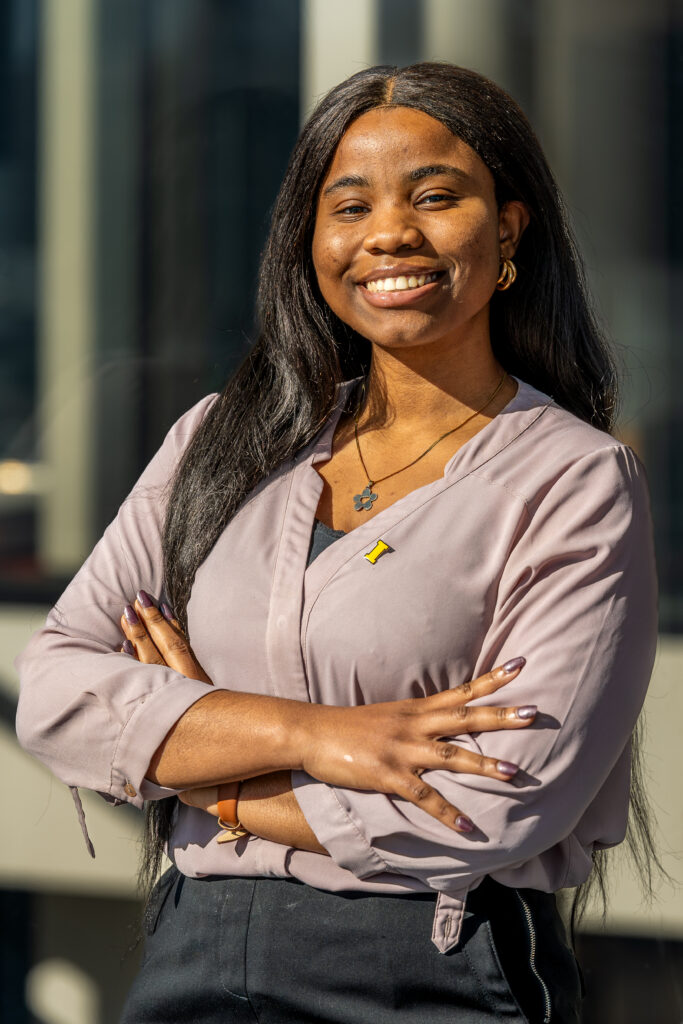
Faith Ibitoye is a graduate student from Nigeria interested in child and adolescent health. She recently answered some questions about what sparked her interest in public health and why she finds the work so valuable and fulfilling.
Where is your hometown?
I am from the southwest region of Nigeria, and I grew up in Ondo State with my parents, Dr. Abiodun Ibitoye and Mrs. Florence Ibitoye, and two siblings, Favour Ibitoye and Peace Ibitoye.
What is your degree/program of study?
Master of Public Health (MPH) in the Department of Community and Behavioral Health.
Why did you choose to study public health? What about it interests you?
I chose public health because it brings me fulfillment. Specifically, I am drawn to community and behavioral health because it centers on the lived experiences of community members. This discipline allows me to understand people’s values, priorities, and everyday realities, rather than approaching the community from a distance.
My interest began during my National Youth Service Corps (NYSC) year in Nigeria, when I was posted to a local community in Ibadan, Oyo State, in 2019. Initially, I expected to work in a laboratory setting, given my undergraduate training as a microbiologist, but my placement exposed me to the everyday struggles and resilience of community members. I saw how structural challenges shape people’s lives and how these realities often create barriers between communities and interventions/government programs.
What interests me about community health is understanding the strengths and joys within the community and how they can be leveraged to improve health outcomes. During my NYSC, I began engaging adolescent girls in conversations about education, aspirations, and their visions for the future, leading to the launch of the Teenspire Initiative by Adefia, which I founded in 2020. That experience ignited my passion for working with communities, especially young adults, even before I formally understood it as public health. Later, working with a non-governmental organization (Royal Heritage Health Foundation) in Kwara State introduced me to public health fieldwork (qualitative research and community engagement) and further encouraged me to pursue an MPH degree. I realized that through this discipline, I could listen to community voices, elevate their perspectives, and advocate for them in meaningful ways, and that brings me deep fulfillment.
What are your academic and research interests?
Broadly, I am interested in child and adolescent health and community-based participatory research. Specifically, I am currently interested in understanding how family dynamics influence adolescent sexual and reproductive health.
Tell us about some of the activities you are involved in.
On campus, I work as a graduate research assistant in the Childhood Injury Risk Prevention (ChIRP) Lab supervised by Dr. Elizabeth O’Neal and as a research associate on Victor Soupene’s research team. I currently serve as president of the Community and Behavioral Health Student Association (CBHSA), a graduate student ambassador, and a member of the Plugged in to Public Health podcast team at the college. These activities have shaped my research, leadership, and public speaking skills. I am also part of the Graduate Engagement Corps (GEC) 2026 cohort, where I am trained to prioritize community engagement and build partnerships.
Off campus, I serve in the WallBreakers Christian fellowship at All Nations Baptist Church. I love it!
Why do you think it is important for students to engage with on-campus and community organizations outside of the classroom?
I believe these experiences contribute directly to long-term personal and professional growth. I chose to participate in the activities I mentioned earlier because they aligned with my broader goals and the kind of public health professional I aspire to become. Even when the involvement feels small, it plays an important role in shaping the bigger picture. Joining these activities should help us reflect on our goals, build confidence, encourage exposure to new experiences, and develop competencies that extend beyond the classroom.
What are your career plans post-MPH?
I plan to pursue my PhD in Community and Behavioral Health after graduation, and I plan to expand my work at Teenspire Initiative by Adefia.
What have you enjoyed most about your time at the College of Public Health?
The college’s diversity is a strength, and it gives me a sense of belonging as an international student. I am grateful for the access to resources, opportunities, and activities that prepare me for my real-world role as a public health professional. The warmth and supportive interactions with faculty and staff are also very impressive.